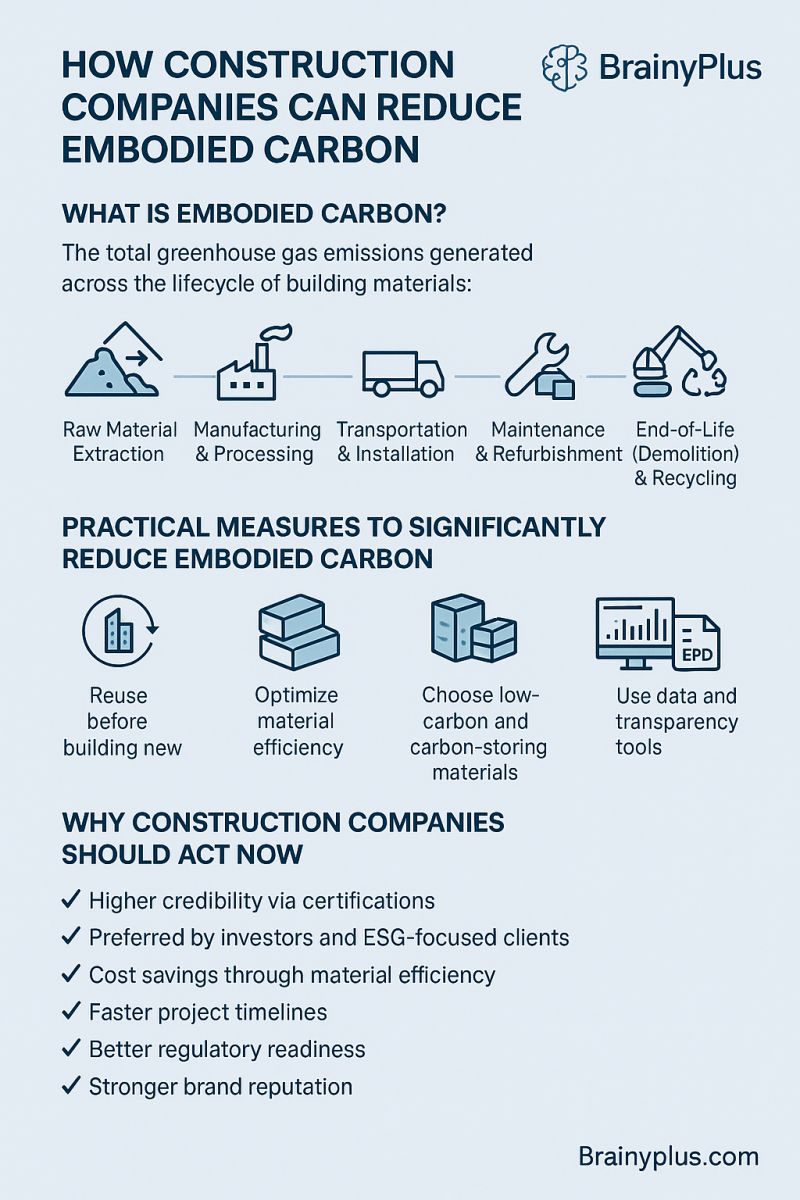
The construction sector is responsible for nearly 40% of global CO₂ emissions, and as buildings become more energy-efficient, embodied carbon-the emissions generated from raw material extraction, manufacturing, transportation, construction, maintenance, and end-of-life-now represents 50% or more of a building’s total climate impact. These emissions are “locked in” the moment construction begins, making early decisions absolutely critical.
For construction companies, reducing embodied carbon isn’t just about compliance or environmental responsibility-it’s a strategic business advantage.
Practical Measures to Significantly Reduce Embodied Carbon
Reuse before building new
Adaptive reuse of existing structures can reduce embodied carbon by 40–50%.
Optimize material efficiency
Efficient structural design, thinner slabs, reduced underground structures, and minimized waste dramatically cut material quantities and cost.
Choose low-carbon and carbon-storing materials
• Low-carbon concrete (SCMs: fly ash, slag)
• Mass timber systems
• High recycled-content steel
• Locally sourced materials to reduce transport impact
Adopt circular design principles
Design for disassembly, flexibility, and reuse to minimize future demolition emissions.
Use data and transparency tools
Environmental Product Declarations (EPDs), EC3, One Click LCA, and whole-building LCA tools enable smart, data-driven procurement.
Why Construction Companies Should Act Now
Embodied carbon reduction delivers significant business and market advantages:
• Higher credibility via certifications (LEED, BREEAM, ILFI Zero Carbon, EDGE, IGBC, GRIHA)
• Preferred by investors and ESG-focused clients
• Cost savings through material efficiency, reduced waste, and optimized supply chains
• Faster project timelines via prefabrication and optimized systems
• Better regulatory readiness, avoiding penalties and preparing for emerging global mandates
• Stronger brand reputation in an increasingly sustainability-driven industry
In green procurement markets, low-embodied-carbon projects often command higher valuations, attract premium tenants, and qualify for green financing.
How BrainyPlus Can Help
BrainyPlus supports construction firms in their transition to low-embodied-carbon pathways through:
• Whole-building LCA assessments
• Material carbon benchmarking
• Vendor/EPD verification
• Embodied-carbon reduction roadmaps
• Certification alignment (LEED, BREEAM, EDGE, IGBC, GRIHA)
• Data intelligence, analytics, and custom ESG reporting pipelines
If your company aims to lead in sustainable construction, BrainyPlus can be your strategic consulting partner.